Lists and libraries
Lists are suited to structured rows of business data. Libraries are suited to documents, metadata, versioning, approval, and content lifecycle management.
Practical SharePoint Online tutorials for lists, libraries, Microsoft Lists, metadata, permissions, document management, and Microsoft 365 collaboration.

SharePoint Online remains one of the core foundations of Microsoft 365. It supports document libraries, lists, intranet pages, permissions, metadata, search, automation, and collaboration patterns used by teams every day. Because SharePoint is so flexible, it is easy to create sites that work at first but become difficult to govern when content volume, permissions, and business processes grow.
This pillar collects nextM365 guidance for using SharePoint in practical Microsoft 365 scenarios. The focus is on lists, document libraries, Microsoft Lists, information architecture, automation touchpoints, and how SharePoint fits with Power Automate, Power Apps, Teams, and Copilot experiences. The goal is to help administrators, makers, and site owners choose simple patterns that can scale.
Use this page when you need to understand where to store information, how to structure metadata, when to use a list or library, and how SharePoint content can support automation or AI-driven experiences. Start with the beginner articles, then move into permissions, library design, and integration patterns as your solution matures.
Lists are suited to structured rows of business data. Libraries are suited to documents, metadata, versioning, approval, and content lifecycle management.
Good SharePoint design starts with clear ownership, site purpose, metadata, permissions, and lifecycle expectations. These decisions reduce cleanup work later.
SharePoint is often the trigger, data source, or document repository behind Power Automate flows and Power Apps solutions.
'%2F%3E%3Cstop%20offset%3D'0.55'%20stop-color%3D'rgb(239%2C246%2C255)'%2F%3E%3Cstop%20offset%3D'1'%20stop-color%3D'rgb(224%2C242%2C254)'%2F%3E%3C%2FlinearGradient%3E%20%3ClinearGradient%20id%3D'splTitle'%20x1%3D'0'%20y1%3D'0'%20x2%3D'1'%20y2%3D'0'%3E%3Cstop%20offset%3D'0'%20stop-color%3D'rgb(3%2C120%2C124)'%2F%3E%3Cstop%20offset%3D'1'%20stop-color%3D'rgb(37%2C99%2C235)'%2F%3E%3C%2FlinearGradient%3E%20%3ClinearGradient%20id%3D'splPanel'%20x1%3D'0'%20y1%3D'0'%20x2%3D'0'%20y2%3D'1'%3E%3Cstop%20offset%3D'0'%20stop-color%3D'rgb(30%2C41%2C80)'%2F%3E%3Cstop%20offset%3D'1'%20stop-color%3D'rgb(15%2C23%2C42)'%2F%3E%3C%2FlinearGradient%3E%20%3C%2Fdefs%3E%20%3Crect%20width%3D'1200'%20height%3D'600'%20fill%3D'url(%23splBg)'%2F%3E%20%3Crect%20x%3D'80'%20y%3D'68'%20width%3D'260'%20height%3D'44'%20rx%3D'22'%20fill%3D'rgb(3%2C120%2C124)'%2F%3E%20%3Ctext%20x%3D'104'%20y%3D'97'%20font-family%3D'Segoe%20UI%2C%20Arial%2C%20sans-serif'%20font-size%3D'18'%20font-weight%3D'900'%20fill%3D'white'%20letter-spacing%3D'1.3'%3ESHAREPOINT%3C%2Ftext%3E%20%3Ctext%20x%3D'84'%20y%3D'154'%20font-family%3D'Segoe%20UI%2C%20Arial%2C%20sans-serif'%20font-size%3D'22'%20font-weight%3D'700'%20fill%3D'rgb(3%2C120%2C124)'%20letter-spacing%3D'2'%3EMICROSOFT%20365%20LISTS%20GUIDE%3C%2Ftext%3E%20%3Ctext%20x%3D'80'%20y%3D'242'%20font-family%3D'Segoe%20UI%2C%20Arial%2C%20sans-serif'%20font-size%3D'74'%20font-weight%3D'900'%20fill%3D'rgb(15%2C23%2C42)'%3ESharePoint%20Lists%3C%2Ftext%3E%20%3Ctext%20x%3D'80'%20y%3D'330'%20font-family%3D'Segoe%20UI%2C%20Arial%2C%20sans-serif'%20font-size%3D'74'%20font-weight%3D'900'%20fill%3D'url(%23splTitle)'%3Evs%20Microsoft%20Lists%3C%2Ftext%3E%20%3Ctext%20x%3D'84'%20y%3D'394'%20font-family%3D'Segoe%20UI%2C%20Arial%2C%20sans-serif'%20font-size%3D'25'%20font-weight%3D'650'%20fill%3D'rgb(51%2C65%2C85)'%3EUnderstand%20storage%2C%20permissions%2C%20UI%2C%3C%2Ftext%3E%20%3Ctext%20x%3D'84'%20y%3D'428'%20font-family%3D'Segoe%20UI%2C%20Arial%2C%20sans-serif'%20font-size%3D'25'%20font-weight%3D'650'%20fill%3D'rgb(51%2C65%2C85)'%3Ecollaboration%2C%20governance%20and%20use%20cases.%3C%2Ftext%3E%20%3Cg%20transform%3D'translate(84%2C486)'%20font-family%3D'Segoe%20UI%2C%20Arial%2C%20sans-serif'%20font-size%3D'16'%20font-weight%3D'800'%3E%20%3Crect%20x%3D'0'%20y%3D'0'%20width%3D'150'%20height%3D'42'%20rx%3D'21'%20fill%3D'white'%20stroke%3D'rgb(94%2C234%2C212)'%20stroke-width%3D'2'%2F%3E%3Ctext%20x%3D'75'%20y%3D'27'%20text-anchor%3D'middle'%20fill%3D'rgb(3%2C120%2C124)'%3ESharePoint%3C%2Ftext%3E%20%3Crect%20x%3D'166'%20y%3D'0'%20width%3D'150'%20height%3D'42'%20rx%3D'21'%20fill%3D'white'%20stroke%3D'rgb(147%2C197%2C253)'%20stroke-width%3D'2'%2F%3E%3Ctext%20x%3D'241'%20y%3D'27'%20text-anchor%3D'middle'%20fill%3D'rgb(37%2C99%2C235)'%3ELists%20App%3C%2Ftext%3E%20%3Crect%20x%3D'332'%20y%3D'0'%20width%3D'132'%20height%3D'42'%20rx%3D'21'%20fill%3D'white'%20stroke%3D'rgb(125%2C211%2C252)'%20stroke-width%3D'2'%2F%3E%3Ctext%20x%3D'398'%20y%3D'27'%20text-anchor%3D'middle'%20fill%3D'rgb(8%2C145%2C178)'%3ETeams%3C%2Ftext%3E%20%3C%2Fg%3E%20%3Cg%20transform%3D'translate(710%2C118)'%3E%20%3Crect%20x%3D'0'%20y%3D'0'%20width%3D'410'%20height%3D'350'%20rx%3D'20'%20fill%3D'url(%23splPanel)'%2F%3E%20%3Crect%20x%3D'0'%20y%3D'0'%20width%3D'410'%20height%3D'42'%20rx%3D'20'%20fill%3D'rgb(40%2C52%2C96)'%2F%3E%3Crect%20x%3D'0'%20y%3D'28'%20width%3D'410'%20height%3D'14'%20fill%3D'rgb(40%2C52%2C96)'%2F%3E%20%3Ccircle%20cx%3D'28'%20cy%3D'21'%20r%3D'6'%20fill%3D'rgb(248%2C113%2C113)'%2F%3E%3Ccircle%20cx%3D'50'%20cy%3D'21'%20r%3D'6'%20fill%3D'rgb(251%2C191%2C36)'%2F%3E%3Ccircle%20cx%3D'72'%20cy%3D'21'%20r%3D'6'%20fill%3D'rgb(74%2C222%2C128)'%2F%3E%20%3Ctext%20x%3D'98'%20y%3D'27'%20font-family%3D'Segoe%20UI%2C%20Arial%2C%20sans-serif'%20font-size%3D'14'%20fill%3D'rgb(203%2C213%2C225)'%3EMicrosoft%20Lists%20-%20SharePoint%20backend%3C%2Ftext%3E%20%3Cg%20font-family%3D'Segoe%20UI%2C%20Arial%2C%20sans-serif'%3E%20%3Crect%20x%3D'42'%20y%3D'82'%20width%3D'326'%20height%3D'64'%20rx%3D'14'%20fill%3D'rgb(3%2C120%2C124)'%2F%3E%3Ctext%20x%3D'205'%20y%3D'122'%20text-anchor%3D'middle'%20font-size%3D'20'%20font-weight%3D'900'%20fill%3D'white'%3ESharePoint%20Site%3C%2Ftext%3E%20%3Crect%20x%3D'42'%20y%3D'178'%20width%3D'148'%20height%3D'62'%20rx%3D'14'%20fill%3D'rgb(37%2C99%2C235)'%2F%3E%3Ctext%20x%3D'116'%20y%3D'216'%20text-anchor%3D'middle'%20font-size%3D'18'%20font-weight%3D'900'%20fill%3D'white'%3EList%20Data%3C%2Ftext%3E%20%3Crect%20x%3D'220'%20y%3D'178'%20width%3D'148'%20height%3D'62'%20rx%3D'14'%20fill%3D'rgb(13%2C148%2C136)'%2F%3E%3Ctext%20x%3D'294'%20y%3D'216'%20text-anchor%3D'middle'%20font-size%3D'18'%20font-weight%3D'900'%20fill%3D'white'%3EViews%3C%2Ftext%3E%20%3Crect%20x%3D'130'%20y%3D'270'%20width%3D'150'%20height%3D'48'%20rx%3D'14'%20fill%3D'rgb(20%2C184%2C166)'%2F%3E%3Ctext%20x%3D'205'%20y%3D'301'%20text-anchor%3D'middle'%20font-size%3D'16'%20font-weight%3D'900'%20fill%3D'white'%3ELists%20App%20UI%3C%2Ftext%3E%20%3Cpath%20d%3D'M205%20146%20v30%20M116%20240%20v28%20M294%20240%20v28'%20stroke%3D'rgb(125%2C211%2C252)'%20stroke-width%3D'5'%20stroke-linecap%3D'round'%2F%3E%20%3C%2Fg%3E%20%3C%2Fg%3E%20%3C%2Fsvg%3E)
Learn SharePoint Lists with practical examples, columns, views, permissions, forms, version history, JSON formatting, Power Automate, Power Apps, limitations, and governance.

Learn SPFx development end to end: project setup, React web parts, PnPjs, Microsoft Graph, REST, extensions, security, App Catalog deployment, and troubleshooting.
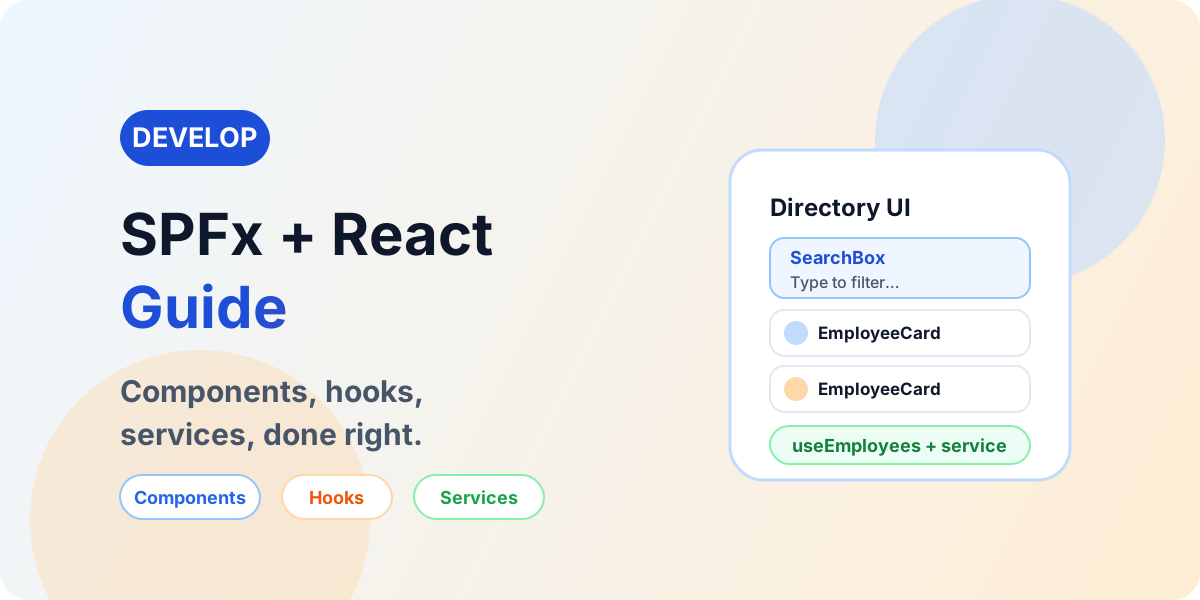
Build production SPFx solutions with React architecture: components, hooks, services, PnPjs, Graph, Fluent UI, error handling, performance, and testing.
Use PnPjs in SPFx with current patterns for lists, CRUD, filtering, paging, batching, files, users, groups, and search — behind a service layer.
Use Microsoft Graph with SPFx securely: delegated authentication, least-privilege permissions, users, groups, Teams, files, paging, throttling, and production readiness.
Diagnose SPFx failures layer by layer: Node.js, build, deployment, web parts, PnPjs, REST, Graph permissions, CORS, and production-only errors — with fixes.
Design SharePoint content types and site columns with reusable metadata, hub publishing, and governance rules that survive growth.
Plan SharePoint hub sites with architecture, navigation, search, permissions, and governance patterns that scale beyond single team sites.
Govern SharePoint external sharing with link types, guest lifecycle, expiry policies, and access reviews that balance collaboration and security.
Use a list when you need structured business data, columns, views, lightweight tracking, and integration with Power Apps or Power Automate.
Use a library when documents, versions, metadata, approvals, retention, and collaboration around files are the primary requirements.
Microsoft Lists is a modern list experience built on SharePoint list technology, with templates and a user-friendly entry point.